
September 18, 2026, 4:41 pm
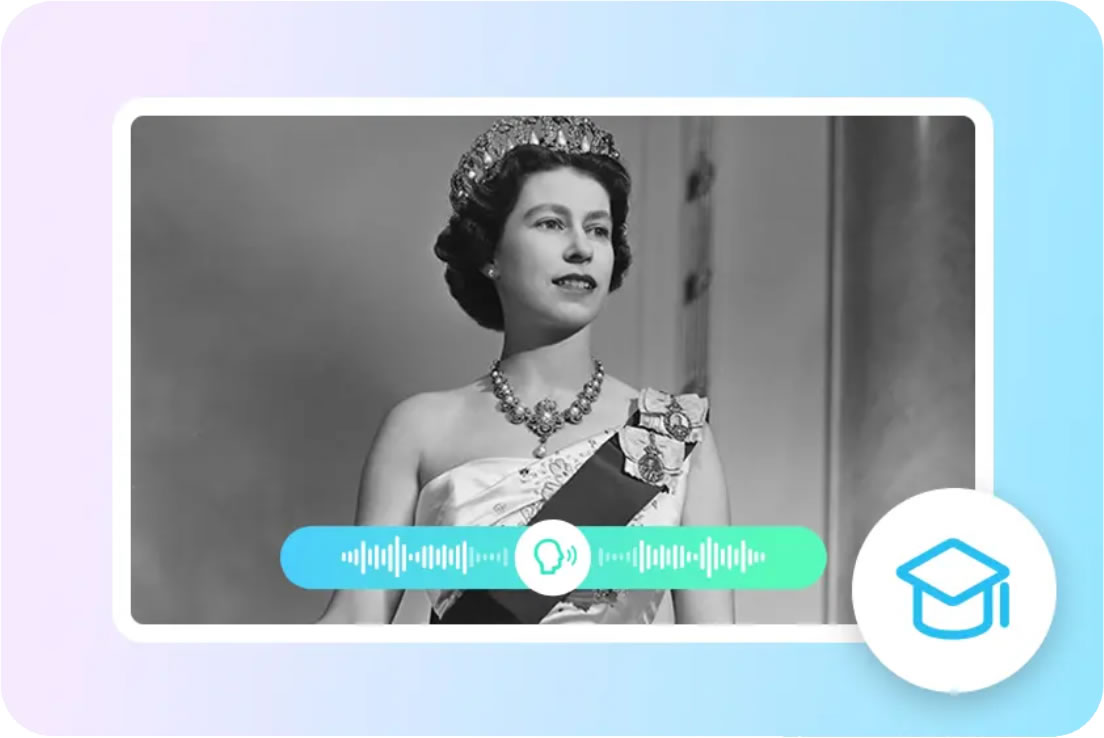
Press play on stop three of your audio tour: The painting you're standing in front of has waited centuries to move, even slightly. Museums are full of masterworks frozen at their most dramatic moment - a battle mid-charge, a storm about to break, a quiet domestic scene caught in a single beam of light. Pippit's Seedance 2.5 model can finally give these paintings a few seconds of motion, turning centuries-old brushstrokes into short, moving scenes without altering the original artwork itself.
Since this concept is essentially a museum tour brought to life, let's structure it the way an audio guide would walk you through it.
Not every painting needs to move to be appreciated, but some practically beg for it — a scene with implied motion already captured in the brushwork, like a wave about to crash or a figure mid-gesture. These are the paintings audiences most want to see continue.
Clear, high-resolution reproductions with visible detail intact.
Scenes with an implied action already present — a raised arm, a billowing sail, a candle's flicker.
Paintings with a strong, singular focal point rather than an overly busy composition.
Enough historical or stylistic reference material available to keep the animation period-accurate.
Launch Open Pippit's Video Generator, select Seedance 2.5, and feed the artwork as a prompt. Type a timestamped prompt to describe the motion.
Example: Make an animation lasting 15 seconds from the following Renaissance painting. 0–5 seconds: the model remains stationary. Candlelight gently flickers in the background. 6–11 seconds: a slight breeze blows by the curtain near the model, whose expression grows soft. 12–15 seconds: close on a turn of the head towards the viewer.
Compare your initial video to the original artwork, and ask yourself whether the additional motion is appropriate and subtle enough, or does it seem excessive and disrespectful of the original?
If there is much more about the painting that needs to be shown — its surrounding environment, another person in the background, etc. — apply the extension technique without having to start from scratch. Export the video at a required resolution for museum digital gallery, educational content, etc.
Creativity transfer can replicate the specific painterly style and mood of the original work, rather than defaulting to a generic look, keeping the motion visually faithful to the artist's actual technique.
Improved texture realism helps candlelight, fabric, and natural elements move in a way that stays consistent with the painting's original lighting and texture, rather than looking artificially added on top.
Uploading the painting alongside historical or stylistic reference material, supported by input of up to 50 pieces of material, helps keep the animated result grounded in genuine art historical accuracy.
Pairing the moving painting with a short spoken description — the kind an actual museum audio guide would offer — using a tool like SeedAudio 1.5 gives viewers context for what they're seeing, turning a visual novelty into a genuinely educational moment.
Choose paintings with real narrative or historical weight, not just visual drama.
Pair each animated piece with a short caption or curatorial note for context.
Keep the motion consistent in restraint and tone across an entire exhibit series.
Treat this as an ongoing AI video generator for an entire museum collection, not a single featured work.
Not every painting comes with complete documentation about its subject or context, and in those cases, it's worth being transparent that certain visual choices in the animation are informed interpretation rather than confirmed fact, keeping the educational integrity of the piece intact.
A single museum collection often spans multiple centuries and artistic movements, and applying period-appropriate motion and tone to each piece — subtle and restrained for a Dutch portrait, more dramatic for a Baroque battle scene — helps each animated work stay true to its specific era rather than applying one uniform treatment across the whole collection.
Animated paintings tend to draw noticeably more attention from younger visitors than static placards, making this format a useful tool for museums specifically trying to make historical collections feel more accessible to school groups and families without diluting the educational content itself.
For collections that travel between venues, having a small library of animated pieces ready to go makes it easier to produce fresh promotional content for each new stop on the tour, without needing to develop entirely new materials at every venue.
Involving an actual art historian or curator in reviewing generated content before public display helps catch any stylistic or historical inaccuracies early, keeping the museum's educational credibility intact even as it experiments with newer forms of visitor engagement.
Some of history's most famous paintings have always looked like they were captured a half-second before something happened, and now that half-second can finally play out. With Seedance 2.5 inside Pippit, centuries-old art can move again, briefly and respectfully, giving new audiences another way to connect with it. If there's a painting that's always felt like it was holding its breath, it might be worth opening Pippit and finally letting it exhale.