
July 8, 2026, 6:18 pm
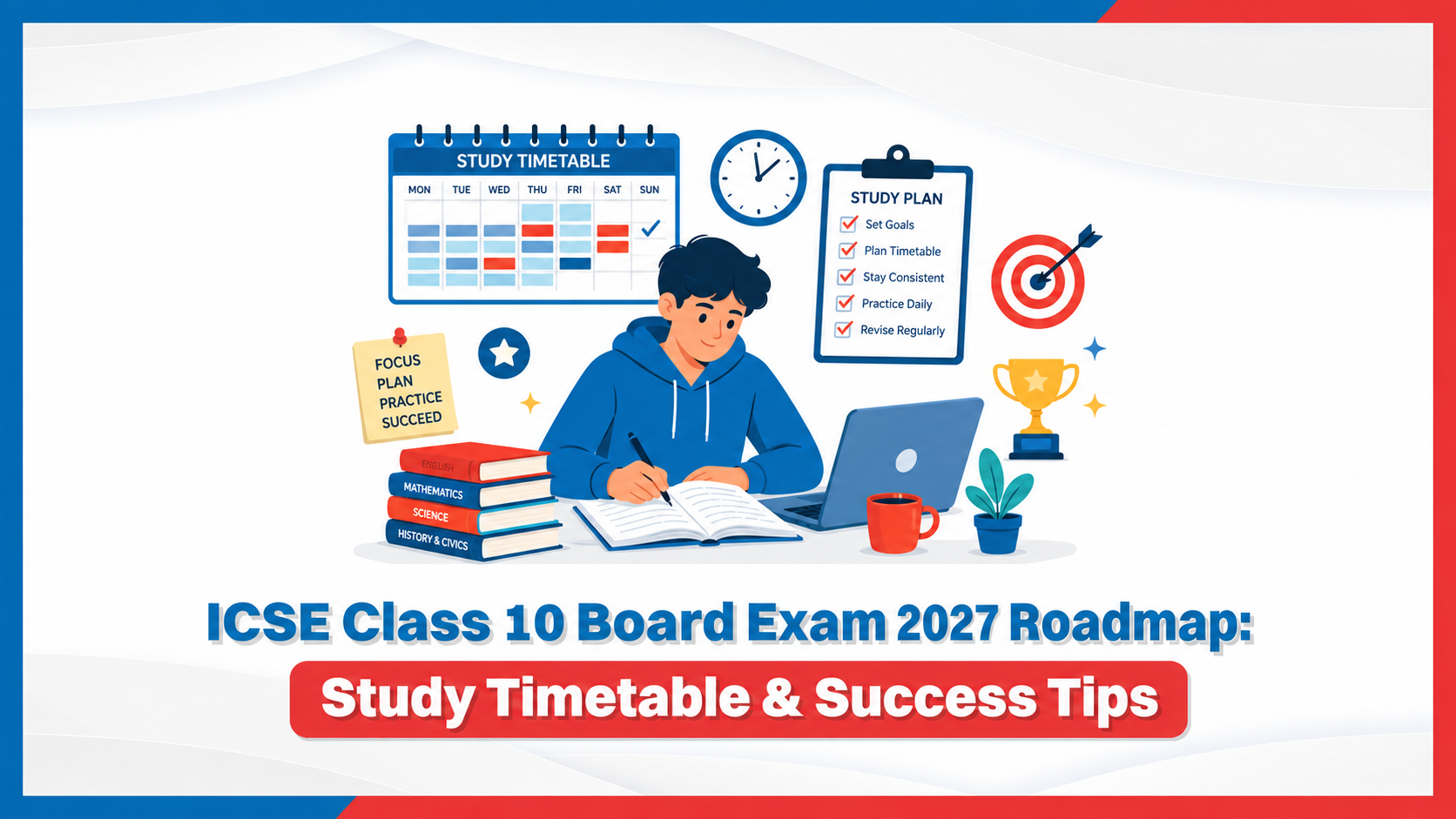
The ICSE class 10 exams are not about studying hard, but studying smart with the right focus.
Most subjects follow an 80 marks written paper + 20 marks internal assessment covering projects, practicals, and assignments. You will study core subjects such as English (Language & Literature), Mathematics, Science (Physics, Chemistry, Biology as separate papers), History & Civics, Geography, and a Second Language.
The ICSE syllabus is vast and concept-based and is unique in the sense that each chapter has a defined weightage in the final examination. That's why your work needs direction, not just prep.
A smart place to start? On day one, get the official CISCE syllabus. The high-weightage units should be highlighted first, as this is where you should really spend your preparation time.
Effective June 2026. Spend the first four months building concepts chapter-by-chapter. Start application from October. Solve problems, write answers, and attempt questions. From February 2027, switch to full revision mode.
Start in October and rotate one subject in depth per week. Don’t skip subjects. Practise papers on the weekend. This is the heart of your ICSE Class 10 roadmap.
The January to March period is critical. Don’t learn anything new. Concentrate on revision, sample papers, and rectifying weak areas. Try to do at least two full papers a week, under timed conditions.
ICSE questions test understanding, not memory. Read the concept, shut the book, and describe it aloud. If you can't explain it simply, you don't know it well enough. These ICSE smart study tips will save you hours of re-reading.
Study at the same time each day. Your brain gets used to a schedule. A 5-hour, focused session is better than a 9-hour, distracted one. During study blocks, leave your phone in another room.
Block your day into 45 minute slots with 10 minute breaks. Study two subjects per day at least. Give more blocks to the subjects in which your score is lower.
Don't forget about Internal Assessment marks - 20% of your score. Do not lose out on ICSE revision tips from your teachers. Don't start sample papers in March, start in November.
Chapter by chapter. Make 5 points to remember for each chapter on a small card. Go over those cards on Sunday. Here are your quick revision notes for the exam.
Sunday: review the week's topics. Last Sunday of the month: revise entire month. This spaced repetition is one of the most proven ICSE revision tips you can follow.
Make an A4 sheet for each subject with all the formulas, dates, and key terms. Put these sheets up on your study wall. Looking at them every day helps with long-term memory.
Three days before: just read your revision cards and formula sheets.
Two days before: Try previous year paper.
Day before: rest, light review, sleep by 10 PM.
Weekly writing, composition, and grammar exercises. Write short paragraph answers to all important questions in each text. For literature, don't memorise. Write in your own words, get the theme.
Please solve at least 10 problems in each topic before proceeding. Do the problems you missed again. Make sure to time yourself – ICSE Maths needs both speed and accuracy.
Physics requires derivations and numericals. Chemistry requires reactions and equations. Biology needs diagrams—draw and label them every time, not just the first time. For exact topics, refer to the ICSE board exam guide issued by the CISCE.
History needs timelines. Geography is map work. Write 10 line summaries for each chapter. Weekly updates of these summaries.
The main thing for marks is grammar and composition. Write essays and letters in your second language two times a week. Read the assigned texts carefully.
CBSE follows NCERT books. ICSE books are needed by ICSE students. Stick to your school textbooks; they are your main source of reference. They are as per the CISCE syllabus.
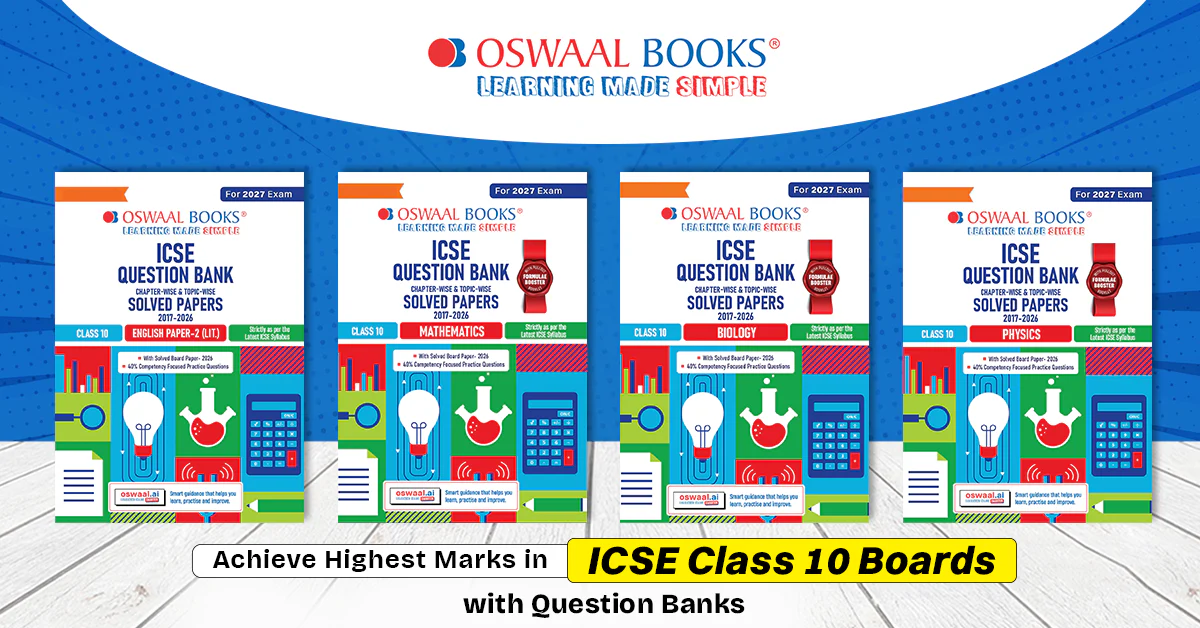
ICSE question bank for class 10 gives you practice questions from real exam pattern. Work these out as you finish each chapter, not just at the end of the year.
Oswaal Sample Papers & Question Banks include latest pattern, previous year questions & marking scheme guidance. These are good to go with your ICSE Class 10 books.
Solve the papers of last 10 years. Scan for recurring themes. Put those on first. Time for each paper you do.
Mock tests help you know your standing. They are not optional. Consistently better performance of students who attempt 15+ sample papers before boards.
Always solve papers in same time as given in actual exam. ICSE Board Exam Tip 1: Time Pressure in the Hall Won’t Catch You Off Guard. This is the most useful ICSE board exam tip.
Mark your own paper after each mock test with the help of the answer key. Record every mark you lost and why. Be real.
Maintain an error log. Write next to each mistake what should have been done. Review this log every week. You will not make the same mistakes.
Wake up and shine. Go through your revision cards and formula sheets. Eat a good breakfast. Be in the examination hall 20 minutes before the stated time.
For the first 10 minutes, read the question paper. Do not write anything. First, try questions you know well. Write clear, structured answers – use headings and numbered steps where relevant.
Divide the paper Time / Marks. Hang in there. Don’t spend 20 minutes on a 2 mark question.
Stress Management Advice
Breathe. You are ready. If a question seems hard, skip it and go back later. Most students who panic at questions others struggled with, too.
Study daily - even if it’s 30 minutes on a bad day. One week of intensity? Nothing beats three months of consistency.
Set small goals each week. Strike them out. Progress feels good — leverage it. Speak to friends who are also preparing seriously.
Make the most of your day at school. Pay attention to the class. Your self-study hours are then revision, not learning for the first time.
Anxiety is born from uncertainty. Practice papers, know your syllabus, and prepare well. This will reduce uncertainty. The best cure for exam fear is good preparation.