
May 7, 2026, 12:12 pm
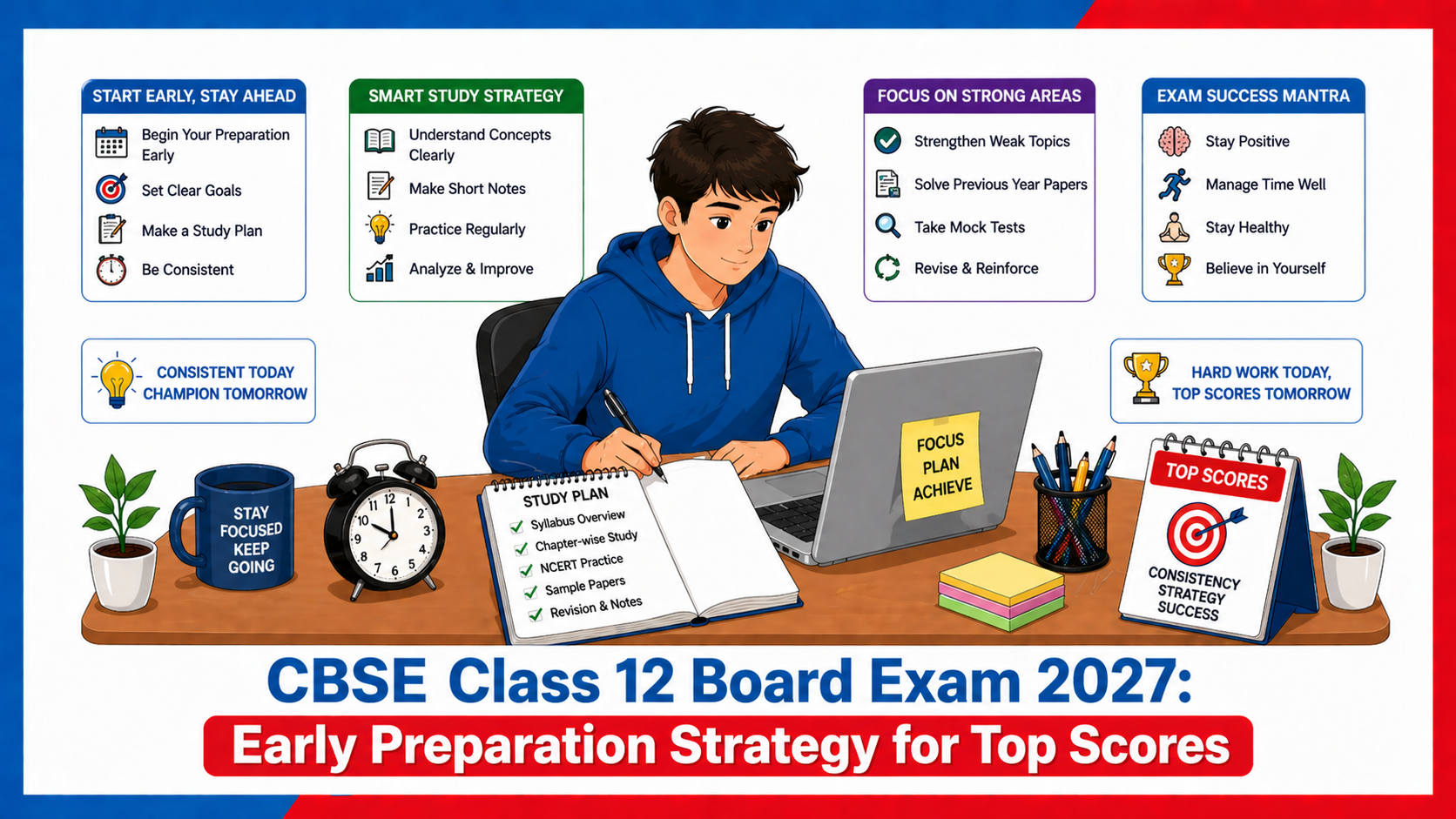
Stepping into Class 12 is altogether a different experience, where there is pressure of making apt career choices, and living up to the expectations. It is the Class 12 board results that play a crucial role in shaping college admissions and future career paths.
Every year, lakhs of students appear for the exam, yet only a small percentage manage to score 95+ in the exam. It’s not something extraordinary that toppers swear by; they simply do the basics consistently, with the right strategy and discipline. More than intelligence, they stick to early preparation, consistency, and a well-planned strategy, which makes them score exceptionally well.
If you are also the one targeting high scores in 2027, the best step you can take today is to begin early and follow a structured approach that balances concept clarity, practice, and revision. Keeping this guide by your side, you can plan your study schedule effectively, stay consistent throughout the year, and move one step closer to achieving the score you’re aiming for.
Before planning your preparation, it is quite important to understand the stream you belong to and how your subjects are evaluated in the CBSE Class 12 Board Examination. Each stream—Science, Commerce, and Humanities- has a slightly different structure, subject combination, and marking scheme.
This is the most sought-after stream for the students who aim for careers in engineering, medicine, research, and technical fields. It focuses heavily on mathematical formulas, trigonometric problems, Physics derivatives, and endless Chemistry equations. Core subjects offered:
|
Subject Type |
Theory Marks |
Practical |
Total |
|
Physics |
70 |
30 |
100 |
|
Chemistry |
70 |
30 |
100 |
|
Biology |
70 |
30 |
100 |
|
Mathematics |
80 |
20 (Internal) |
100 |
|
English |
80 |
20 (Internal) |
100 |
Science subjects include practical exams, and students must pass both theory and practical separately.
The Commerce stream is suitable for students interested in business, finance, economics, and management. It is more conceptual and application-based, especially in subjects like Accountancy. The following is the list of the core subjects–
Exam Pattern & Marks Distribution
|
Subject |
Theory Marks |
Internal/Project |
Total |
|
Accountancy |
80 |
20 |
100 |
|
Business Studies |
80 |
20 |
100 |
|
Economics |
80 |
20 |
100 |
|
Mathematics |
80 |
20 |
100 |
|
English |
80 |
20 |
100 |
Unlike Science, most Commerce subjects do not have lab practicals but include project work and internal assessments.
The Humanities stream offers diverse subjects focused on society, human behaviour, and critical thinking. It opens doors to exemplary career opportunities such as the Civil Services, law, journalism, psychology, and academia.
|
Subject |
Theory Marks |
Practical/Project |
Total |
|
History |
80 |
20 |
100 |
|
Political Science |
80 |
20 |
100 |
|
Goegraphy |
70 |
30 |
100 |
|
Pschology |
70 |
30 |
100 |
|
English |
80 |
20 |
100 |
Some subjects like Geography and Psychology include practical components, while others are theory + project-based.
Regardless of the stream, the overall exam structure remains similar:
A well-structured and realistic monthly plan is part of every Class 12 topper’s success story. Starting early in Class 12 will give you ample time for revision, solving mock tests, Class 12th question bank, & Class 12th CBSE previous year question papers. Here is a recommended month-by-month approach that students can follow:
|
Month |
Focus Area |
Key Activity |
|
April-May |
Foundation Building |
Complete NCERT reading for all subjects; prepare chapter summaries |
|
June-July |
Concept Deepening |
Solve NCERT exercises, start reference books for tough chapters |
|
August |
First Revision Cycle |
Revise units 1-3 in all subjects; attempt chapter-wise MCQs |
|
September |
Practice & Analysing Your Mistakes |
Solve Class 12th CBSE previous year question papers & identify your weak areas |
|
October |
Second Revision Cycle |
Full syllabus revision; solve Oswaal Class 12th CBSE Question Banks |
|
November |
Mock Test series |
Attempt full-length mock tests to practice within real exam conditions |
|
December |
Final Revision |
Revise formulas, dates, & key concepts, and solve 10 years question papers of Class 12 |
|
January-February |
Pre-Board Focus |
Pre-board exams, strict time-based practice, and error analysis |
|
March |
Board Exam Month |
Light revision only, focus on accuracy & confidence |
Scoring 95+ in CBSE Class 12 requires a different strategy for each subject. Here is a focused approach for the most important subjects across streams:
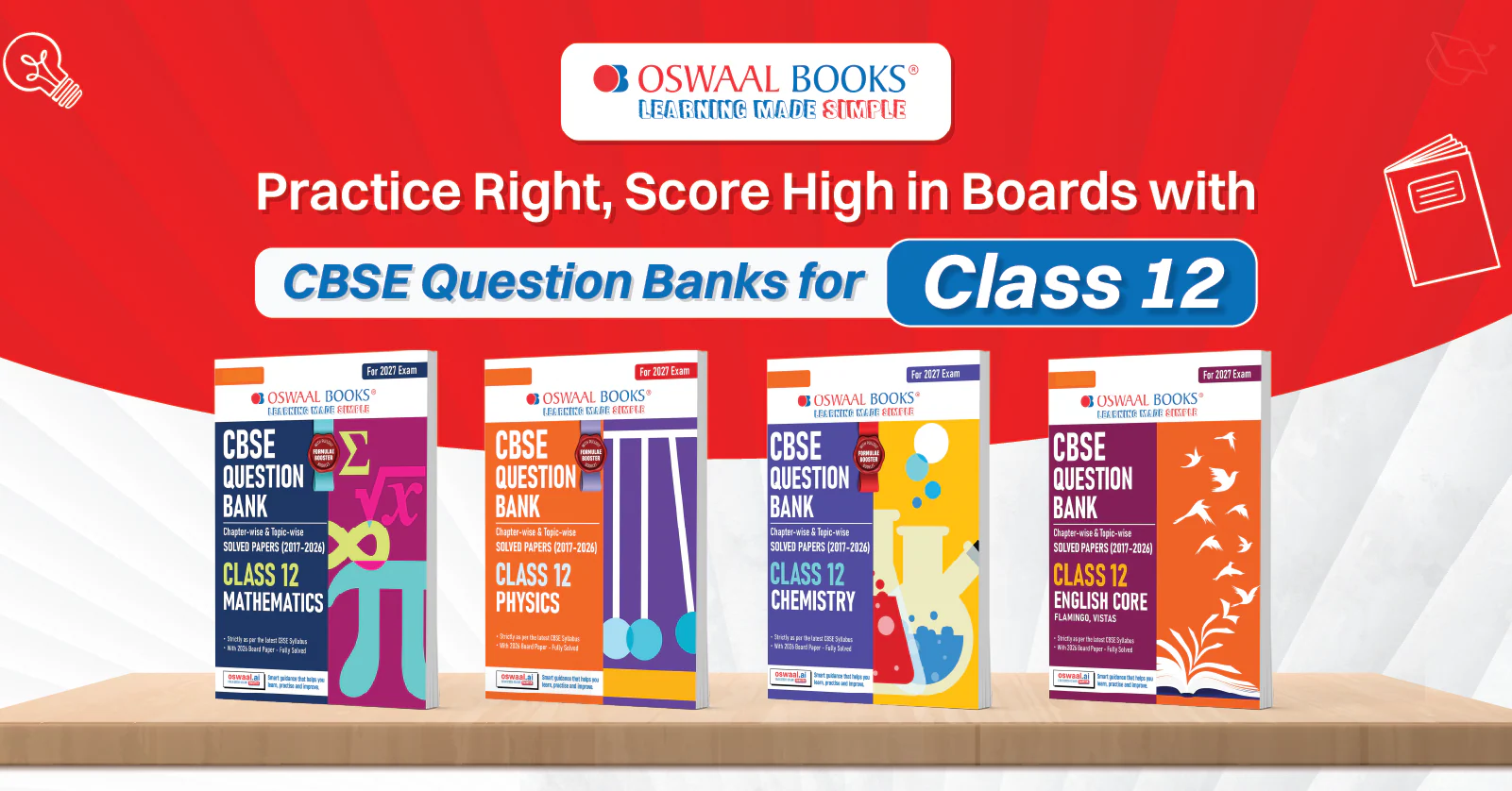
Scoring 95+ in CBSE Class 12 isn’t about studying more—it’s about studying smart. With the right resources like CBSE question banks and CBSE Class 12 previous years question papers, you can boost both accuracy and confidence.
Here’s how the Oswaal Collection helps:
Preparing for the CBSE Class 12 Board Exam 2027 may feel overwhelming at first, but with early planning, the right strategy, and consistent effort, scoring 95+ is absolutely achievable. Focus on building strong concepts through NCERT, practice regularly with Oswaal Class 12th question banks, and analyse your performance using CBSE Class 12 previous year question papers. To be the next topper, you don’t need to do anything extraordinary; all you need is to stay consistent, revise smartly, and avoid last-minute stress. Start early, stay disciplined, and success will follow.
Q1. When should I start preparing for the CBSE Class 12 Board Exam 2027?
It is best to start from the beginning of the academic session (April). Early preparation helps in better concept clarity and gives enough time for revision and practice.
Q2. Are CBSE Class 12 previous year question papers important?
Yes, 12th CBSE previous year question papers are extremely important as they help you understand the exam pattern, marking scheme, and frequently asked questions.
Q3. How many hours should I study daily to score 95+ in Class 12?
A consistent study routine of 4–6 hours daily, along with proper revision and practice, is sufficient to score 95+.
Q4. Is NCERT enough for scoring high marks in CBSE Class 12?
NCERT is the foundation. However, to score 95+, you should also practice from the best question bank for Class 12 CBSE and solve last 10 years question papers class 12.